
Back in the garage sooner
Polyaspartic Garage Floors in Baton Rouge, LA
A polyaspartic floor coating that cures quickly, holds its color in sunlight and suits busy households.
- Free on-site estimates, with the slab moisture-tested before we recommend a system
- Written, itemized quotes that list every prep step and coat
- Surface prep explained up front: grinding, crack repair and dew point checks
When Polyaspartic Makes More Sense Than Epoxy
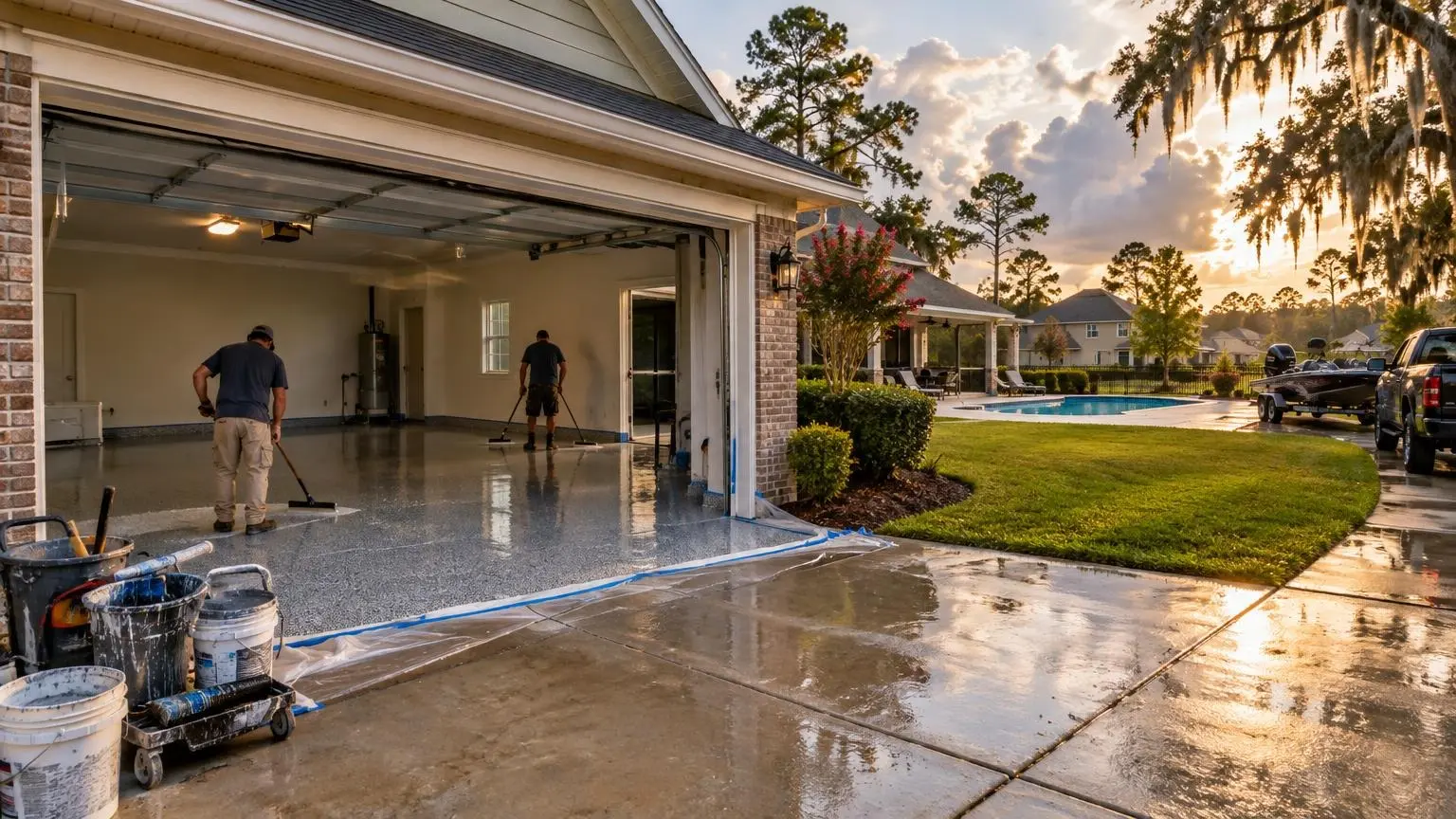
Polyaspartic garage floors suit Baton Rouge households that cannot be without the garage for a week, or that leave the door up on bright afternoons. Polyaspartic is a form of polyurea. It cures far faster than epoxy, it does not yellow in sunlight, and it stays flexible enough to handle heat swings. In HomeGuide's comparison, UV resistance is excellent for polyaspartic and poor to fair for plain epoxy, and full cure takes 1 to 2 days versus as long as a week for epoxy.
Speed is the headline
For many families the cure time is the deciding factor. Bob Vila's cost guide says polyaspartic floors take foot traffic in about 3 to 4 hours and can carry cars after roughly 24 hours, while epoxy needs around 12 hours for walking and 3 days for vehicles. HomeGuide says heavy vehicles should wait 24 to 48 hours. In practice that often means a one-day install, with cars back in the garage the next evening. For anyone who parks on the driveway only reluctantly during hurricane season or a summer storm, that is a real benefit.
Sun, heat and color
The second reason is UV stability. A standard epoxy finish ambers over time when sun reaches it. That is fine in a garage that stays closed, but many here face west, stay open while people work or tailgate, or have windows in the door. Baton Rouge has recorded 110 F, and the summer sun is strong. A polyaspartic floor coating keeps its color and gloss in that light, which is also why we use it as the topcoat over most of our epoxy garage systems.
The trade-off: humidity and working time
Polyaspartic is not magic, and in a humid climate it asks more of the crew. It cures fast, so the working time is short, and hot slabs shorten it further. It also reacts with moisture, so the dew point matters on install day. We keep the slab at least 5 F above the dew point, as industry guidance advises, mix in small batches and work in sections. On thick summer mornings we may wait for the slab to warm up and the air to dry out. Bob Vila's guide notes polyaspartic is not a DIY product, and the reason is exactly this: there is little room for error.
Thinner coats, so prep carries more weight
HomeGuide lists polyaspartic at about 2 to 6 mils for each coat, against 10 to 20 mils for a coat of epoxy. A thinner film bonds tightly, but it hides less. Every crack, divot and grind mark needs attention before it goes on. That is why our polyaspartic garage floors still start the same way: the slab is diamond ground, cracks are repaired and moisture is measured. If readings come back high, we put down a moisture-tolerant primer first. Most homeowners pair the system with a full chip broadcast, which adds thickness and hides small flaws.
Who it suits
This system fits households that need the garage back fast, garages with lots of sun, outdoor-adjacent spaces such as carports, and anyone who wants a floor that will not yellow. HomeGuide puts its lifespan at 10 to 20 years or more. It costs a bit more than epoxy, and we will tell you plainly whether the extra is worth it for your space.
Polyaspartic System Options
We build polyaspartic floors in a few ways, depending on the slab and the look you want.
One-day flake system
Ground slab, polyaspartic base, full chip broadcast and clear polyaspartic top, often finished in a single day.
Solid color polyaspartic
A pigmented coating with a clear top for a clean, single-tone look.
Epoxy base, polyaspartic top
Epoxy underneath for thickness, with polyaspartic on top to handle UV and scratches.
Moisture-tolerant primer
Added when slab readings run high, before the polyaspartic layers go down.
Carports and breezeways
UV-stable coating for covered spaces that still get daylight and blowing rain.
Anti-slip topcoat
Grit added to the final coat for steps, ramps and entries.
Typical Polyaspartic Floor Costs
| Floor | Typical range | Source |
|---|---|---|
| Per sq ft, installed | $5 to $12 | HomeGuide |
| One-car garage | $1,400 to $4,700 | HomeGuide |
| Two-car garage | $2,000 to $6,900 | HomeGuide |
| Three-car garage | $2,900 to $10,400 | HomeGuide |
| Typical project | $1,440 to $3,240 | Bob Vila |
| Per sq ft (alternate guide) | $4 to $9 | Bob Vila |
National ranges from HomeGuide and Bob Vila, which differ from each other. Your slab, the chip load and any repairs set the real figure for a Baton Rouge garage, and it is the written estimate that sets your price.
A Typical Polyaspartic Install
1. Test and plan
Moisture readings and a look at the slab decide the primer and the layer plan.
2. Grind and patch
Diamond grinding opens the surface; cracks and pits are filled flush.
3. Check the dew point
We confirm slab temperature is safely above the dew point before mixing.
4. Coat in sections
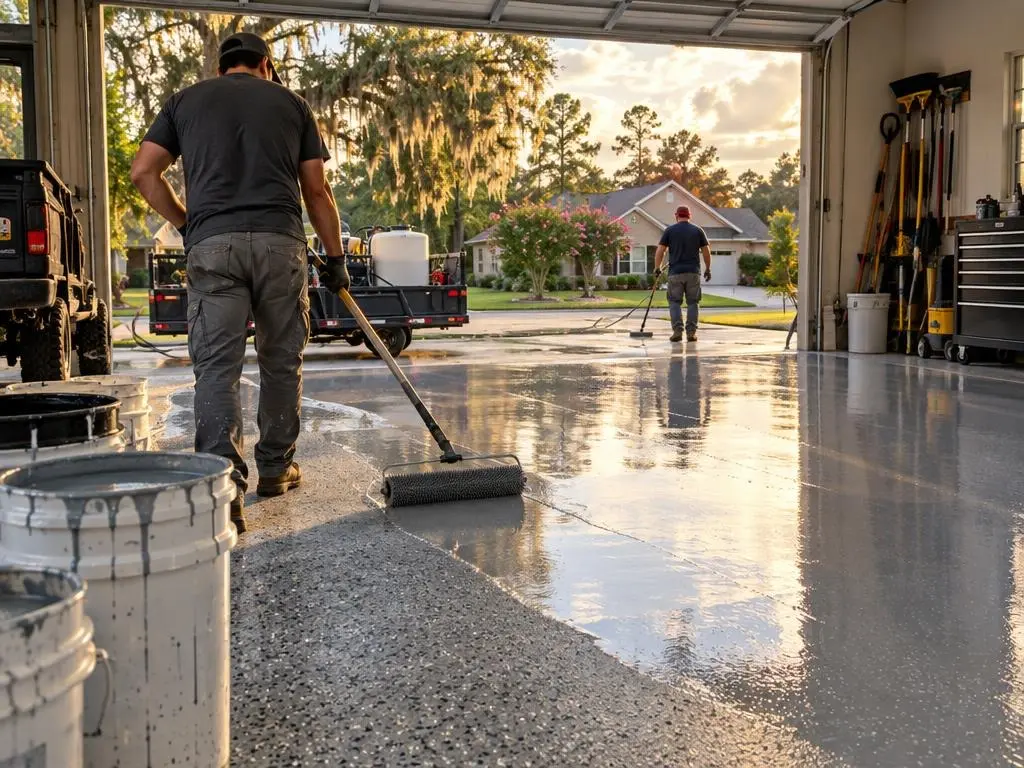
Small batches of base, chips and clear top are applied in sections to fit the short working time.
5. Back in use fast
Foot traffic within hours; we give you the vehicle time for your products.
Why Choose Us for Polyaspartic Garage Floors
Small batches, sectioned work
We mix and apply in amounts the crew can handle in the working time, which matters on hot slabs.
Humidity checks every coat
Polyaspartic reacts with moisture, so we measure conditions before each layer.
Straight advice on value
If epoxy with a polyaspartic topcoat would serve you as well for less, we will say so.
Polyaspartic Garage Floors Questions
Is polyaspartic better than epoxy?
It cures faster and holds up better in sunlight. Epoxy builds a thicker film per coat and is a bit cheaper. Plenty of garages combine the two, with epoxy as the base layer and polyaspartic as the finish.
When can a car go on a new polyaspartic floor?
Bob Vila lists about 24 hours for vehicles, and HomeGuide advises waiting 24 to 48 hours before heavy vehicles roll on. We confirm the time for the products on your floor.
Does humidity affect polyaspartic?
Yes. It reacts with moisture, so the slab must be well above the dew point and the batch sizes must match the conditions. We check before every coat.
Will polyaspartic yellow?
HomeGuide gives polyaspartic an excellent rating for UV resistance, so it holds its color where sunlight reaches the floor.
Polyaspartic Garage Floors Service Areas
- Epoxy Flooring in Baton Rouge, LA
- Epoxy Flooring in Prairieville, LA
- Epoxy Flooring in Gonzales, LA
- Epoxy Flooring in Denham Springs, LA
- Epoxy Flooring in Walker, LA
- Epoxy Flooring in Zachary, LA
- Epoxy Flooring in Central, LA
- Epoxy Flooring in Baker, LA
- Epoxy Flooring in St. Gabriel, LA
- Epoxy Flooring in Port Allen, LA
- Epoxy Flooring in Brusly, LA
- Epoxy Flooring in Addis, LA
- Epoxy Flooring in Plaquemine, LA
- Epoxy Flooring in Shenandoah, LA
- Epoxy Flooring in Oak Hills Place, LA
- Epoxy Flooring in Inniswold, LA
- Epoxy Flooring in Westminster, LA
- Epoxy Flooring in Gardere, LA
- Epoxy Flooring in Merrydale, LA
- Epoxy Flooring in Old Jefferson, LA
- Epoxy Flooring in Watson, LA
- Epoxy Flooring in Livingston, LA
- Epoxy Flooring in Hammond, LA
- Epoxy Flooring in Sorrento, LA
Get a Polyaspartic Garage Floors Estimate
Want the garage back fast? Book a free visit and we will check whether polyaspartic suits your slab.